AI Courses in New Zealand: An Honest Guide
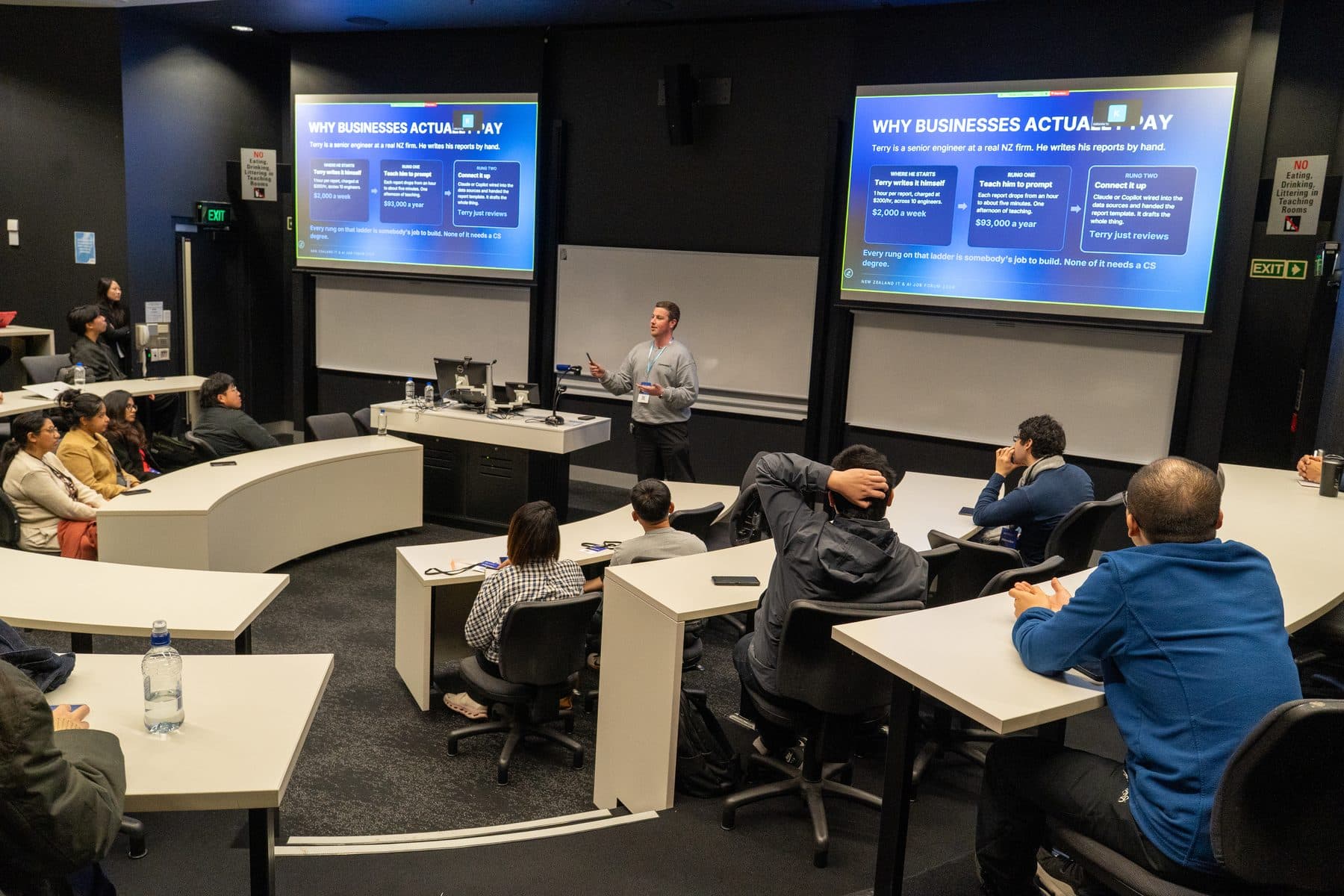
Drafted with AI assistance.
Key takeaways
- Work out which question you are asking first. Choosing a degree, upskilling in a job, and changing careers all have different right answers.
- A degree is genuinely helpful for traditional roles, graduate programmes and immigration. Some companies, mostly smaller ones, will hire on proof without one.
- Universities are strong on fundamentals, structure and graduate pipelines, and weak on currency. Ask a current student what the department is actually like.
- Most of the best short courses are free. Elements of AI, fast.ai, Hugging Face, Kaggle Learn and the cloud providers cover more than most paid options.
- No course gives you proof, a network, judgement or communication, and those are what get you hired in New Zealand.
AI courses NZ is one of the most searched AI phrases in the country, and almost everything that comes back is written by someone with a course to sell.
Young Kiwis in AI does not sell one. We are a free community, we take nothing from any provider mentioned here, and we have no reason to talk you into or out of anything. So this is the honest version, including the parts where the answer is that you probably do not need a course at all, and the parts where you probably do.
First, work out which question you are actually asking
Three very different people search for AI courses in New Zealand, and the right answer for each of them is different.
If you are at school or choosing a degree, your real question is what to study, and a full qualification is genuinely on the table. If you are already working and want to use AI better in your job, you almost certainly do not need a course, you need a habit and a couple of hours a week. If you are trying to change careers, a course can be a useful scaffold, but the thing that actually gets you hired is a portfolio and a network, and a course will only give you those if it is built to.
Be clear about which one you are before you spend money. Most of the regret I hear about comes from people who bought a qualification when what they needed was a project.
University qualifications
Every New Zealand university teaches computer science and the maths that sits underneath machine learning, and several now offer AI-focused majors, specialisations or postgraduate qualifications. The specifics change from year to year, so check the current calendar on the university's own site rather than trusting any list, including this one.
The eight to look at are University of Auckland, AUT, University of Waikato, Massey University, Te Herenga Waka Victoria University of Wellington, University of Canterbury, Lincoln University and University of Otago. Careers New Zealand is a decent neutral starting point for comparing study and career paths, and NZQA is where you check that a qualification is what a provider says it is.
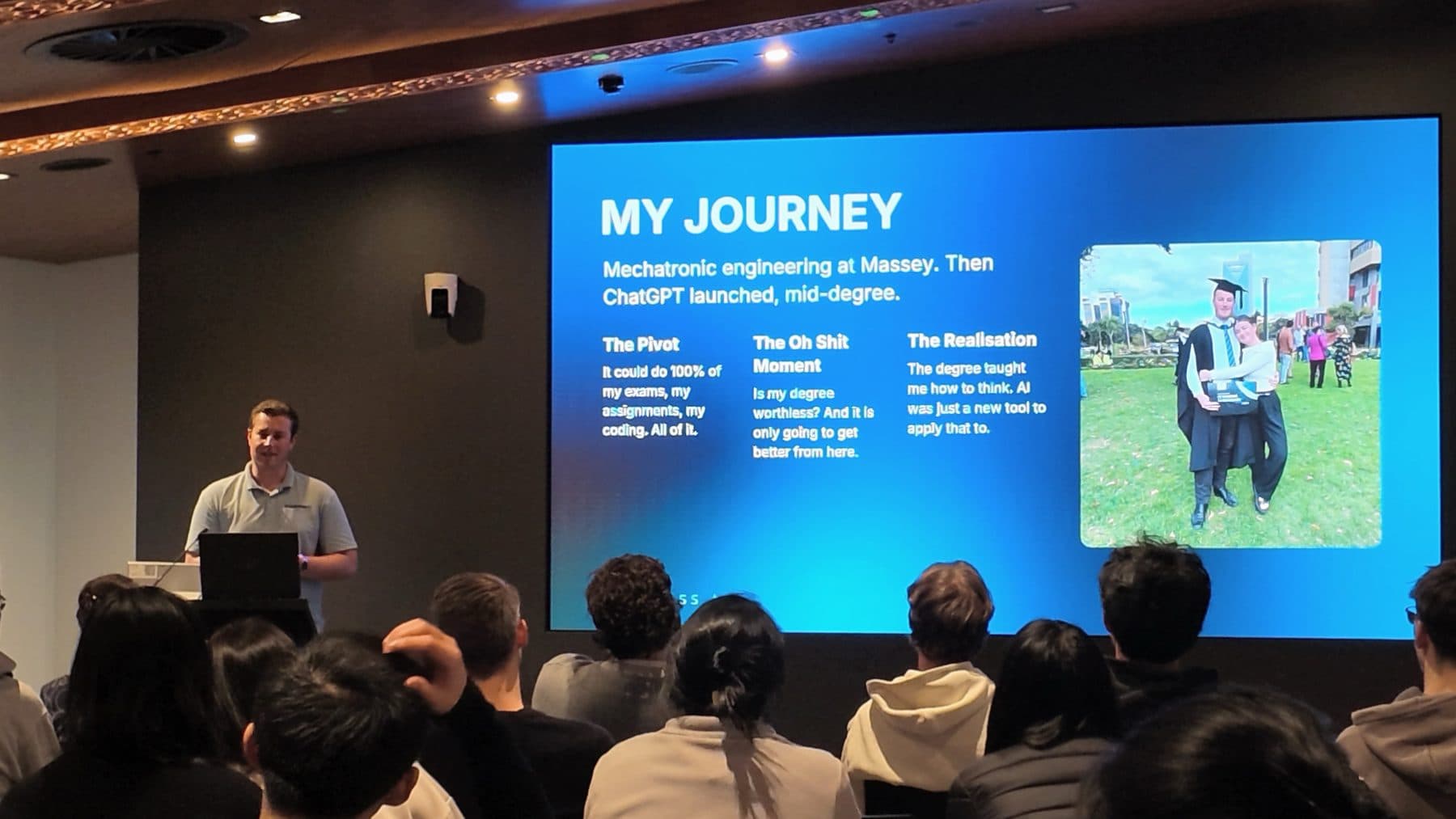
For traditional roles, a degree is genuinely helpful. Graduate programmes at large employers, government agencies and most corporate roles still screen on one, some employers only recruit graduates through university pipelines, and it carries real weight for immigration and for overseas employers. It also gives you the fundamentals that do not expire, like statistics, systems and how to reason about a problem, plus structure and deadlines if you need them. My mechatronics degree taught me no AI at all, but it taught me how to think, and that turned out to be the transferable part.
Some companies will take people without a degree, mostly smaller businesses, consultancies and startups that hire on proof of what you can do. That is a real route, but it is the narrower one, and it only works if the proof exists.
What a degree is not good for is currency. Georgia Singleton put it plainly at one of our sessions: university gave her the soft skills and the work ethic, but she learned the technical side of AI on the job, because tertiary has not caught up. Much of what gets taught is building models from scratch, which almost no New Zealand business needs, and some departments still treat AI use as cheating, which is a strange position given that in industry the opposite is true. That is changing, but unevenly, so ask a current student in that specific department what the culture is actually like. Do not ask the marketing page.
Short online courses and certificates
This is where most of the practical learning happens for people who are already studying or working. It is also where the most money gets wasted, because a certificate is easy to buy and easy to display.
Free or low-cost options that are worth your time: Elements of AI for non-technical grounding in what AI is and is not, Google's machine learning crash course for the fundamentals, Kaggle Learn for short hands-on micro-courses, fast.ai if you want to go deep on the practical side, Hugging Face's courses for large language models and agents, and DeepLearning.AI for short courses on specific tools and techniques.
If your employer already pays for a cloud platform, use it. Microsoft Learn and Google Cloud Skills Boost both have substantial free AI content, and the credentials there actually mean something to employers running those stacks. Anthropic's learning resources are the place to go for Claude specifically, and the n8n documentation is a better automation course than most paid automation courses.
Pricing, content and availability on all of these change constantly, so check with the provider before you commit. And be honest about certificate collecting. A certificate proves you sat through something. A project proves you can do something. Only one of those gets discussed in an interview.
Bootcamps and private providers
Bootcamps can work, particularly if you need structure and genuine job support, and some people thrive on the intensity. But the New Zealand market is small, providers here and overseas have closed at short notice, and the fees are not trivial. Do the diligence.
Ask whether the qualification is recognised, and whether that recognition actually matters for what you want to do next. Ask for outcomes with real numbers, specifically what proportion of recent graduates are working in the field now, not what proportion "found employment". Ask to speak with two graduates the provider did not hand-pick for you. Check who teaches it and whether they still build things for a living, because in this field someone who stopped building two years ago is teaching history.
Be suspicious of anything that promises a job title, a salary or a timeframe. Nobody can promise those. And run the honest comparison: what would happen if you spent the same number of months, and none of the money, building projects and talking to people instead? Sometimes the course still wins. Often it does not.
How to tell a good AI course from a bad one
Red flags: it promises a job title in a few weeks; it is mostly video with nothing you have to build; it teaches one vendor's product as though that product were the entire field; the screenshots are from a model version that is two generations old; and nothing you make gets assessed by a human.
Green flags: you come out the other side with a portfolio; it forces you to ship something; there is a real person who answers questions; the syllabus has been updated in the last few months; and it teaches you how to evaluate and verify what a model produces rather than just how to prompt it.
The single best test is what you can do at the end. Can you show someone a thing you built, explain the decisions inside it, and say honestly what you would change? If the course does not get you there, it is entertainment.
What no course will give you
Three things, and they are the three things that get you hired here.
The first is proof. Employers in New Zealand want to see something working. The second is a network, and no course sells you one, though a good one puts you in a room with a cohort you should stay in touch with. The third is judgement, which is the ability to look at a confident, polished answer from a model and know whether it is right.
That last one matters more than people think. AI is confidently wrong: a perfectly written, completely incorrect answer, delivered with total confidence. It is great at drafting, brainstorming and patterns, and bad at facts, maths and nuance. If you generate a beautiful report that turns out to be wrong and pass it to your manager, you own that, not the model. AI is the intern, you are the senior. Nobody teaches you that on a slide. You learn it by being wrong a few times somewhere the stakes are low.
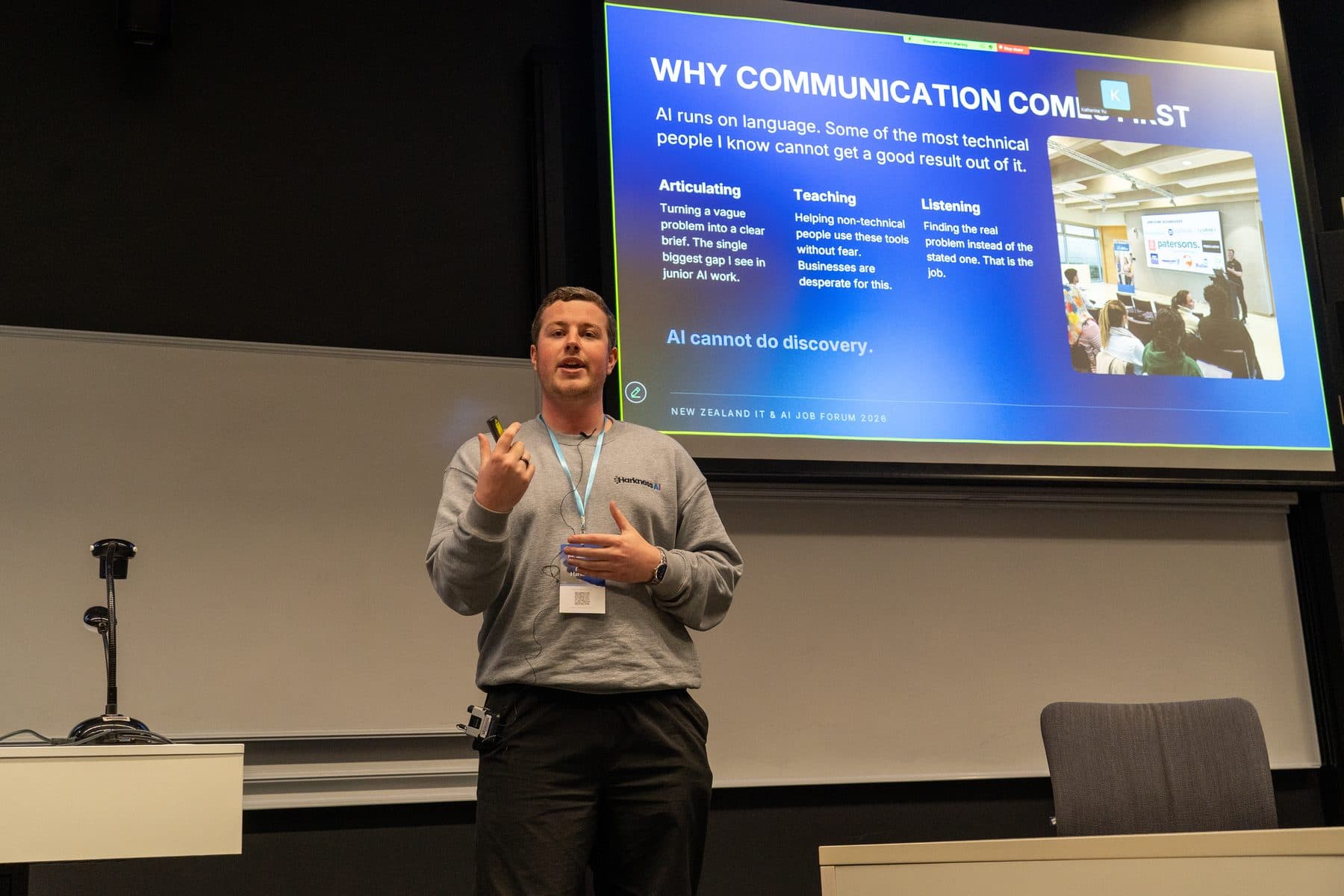
There is a fourth, and it is the one I put first when I talk about what employers hire for: communication. AI runs on language, and some of the most technical people I know cannot describe a problem clearly enough to get a good result out of it. Turning a vague problem into a clear brief, teaching nervous colleagues, and listening for the real problem instead of the stated one are what the job actually is. AI cannot do discovery, and no course certificate says you can.
The free route, if you would rather not spend anything
Give yourself three months. Month one: pick one assistant and one coding tool and use them daily for real work, and work through one of the free courses above alongside that. YouTube counts too. It is a free, world-class AI course, as long as you keep asking how to use what you are watching on something real. Month two: build one small thing for a real person and finish it. Month three: publish what you built, post about what you learned, and message five people a week who do the work you want to do.
That plan costs nothing and produces the two things a course usually does not, which are a portfolio and a network. I have written it out in more detail in How to get into AI in New Zealand, and where the resulting work actually gets you hired in Where to find AI internships and graduate roles in NZ.

If you only do one thing
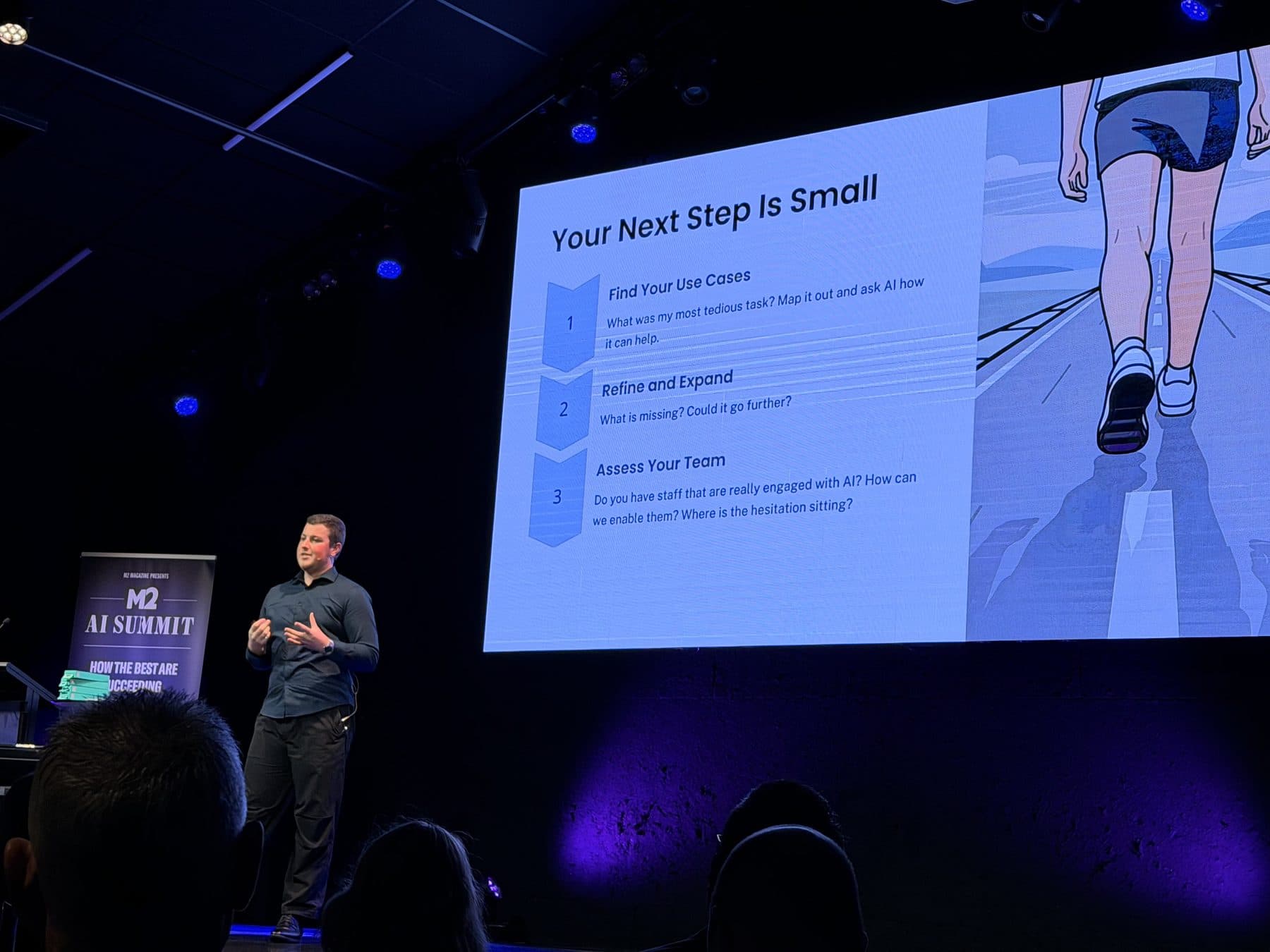
Pick the smallest, cheapest thing that forces you to build something, and start it this week. Whether that is a paper at university, a free course, or a project with no course attached matters far less than whether you finish it. Your next step is small.
Then go and stand in a room with people doing the work. Our AI meetups are free, they run across the country, and you will learn more in two hours of talking to people about what they are building than in most modules. If that sounds useful, join the community and come along.