Where to Find AI Internships and Graduate Roles in NZ
Drafted with AI assistance.
Key takeaways
- Most AI roles in New Zealand are advertised under other titles. Read the responsibilities, not the job title.
- Job boards deserve about fifteen minutes a week. Seek, Indeed, Prosple, Student Job Search, Summer of Tech and your university careers service between them cover the advertised market.
- The application pile is AI-written and AI-screened. Direct outreach, meetups and a visible body of work get you around it.
- Graduate programmes at larger employers usually want a degree. Smaller firms, consultancies and startups are more likely to hire on proof.
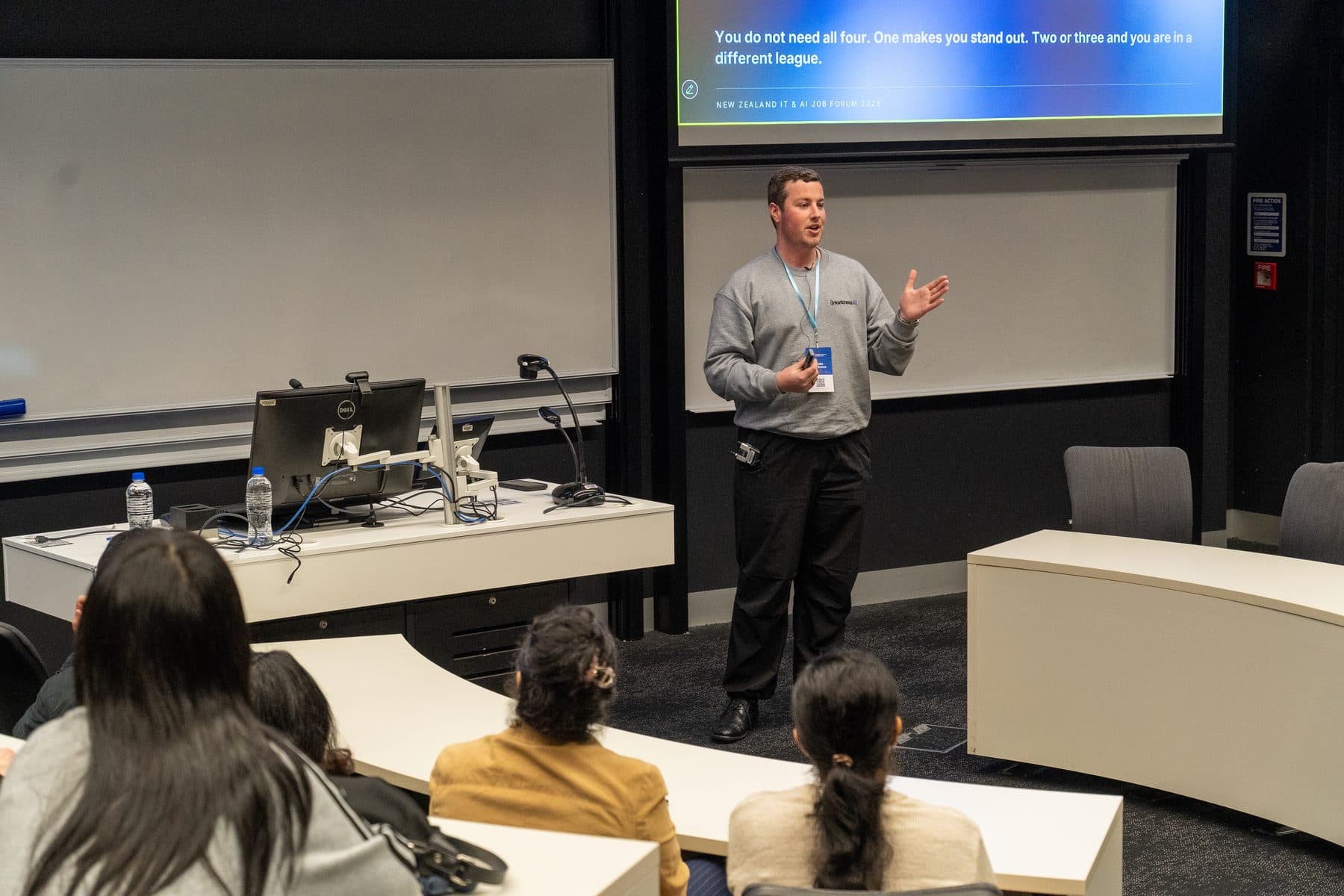
- Employers are hiring for communication, problem solving, automation and generative AI. One makes you stand out; two or three put you in a different league.
There is no shortage of people in New Zealand looking for an AI internship, and no shortage of businesses telling me they cannot find AI talent. Those two facts sit next to each other constantly, and the main reason is that the two groups are looking in completely different places.
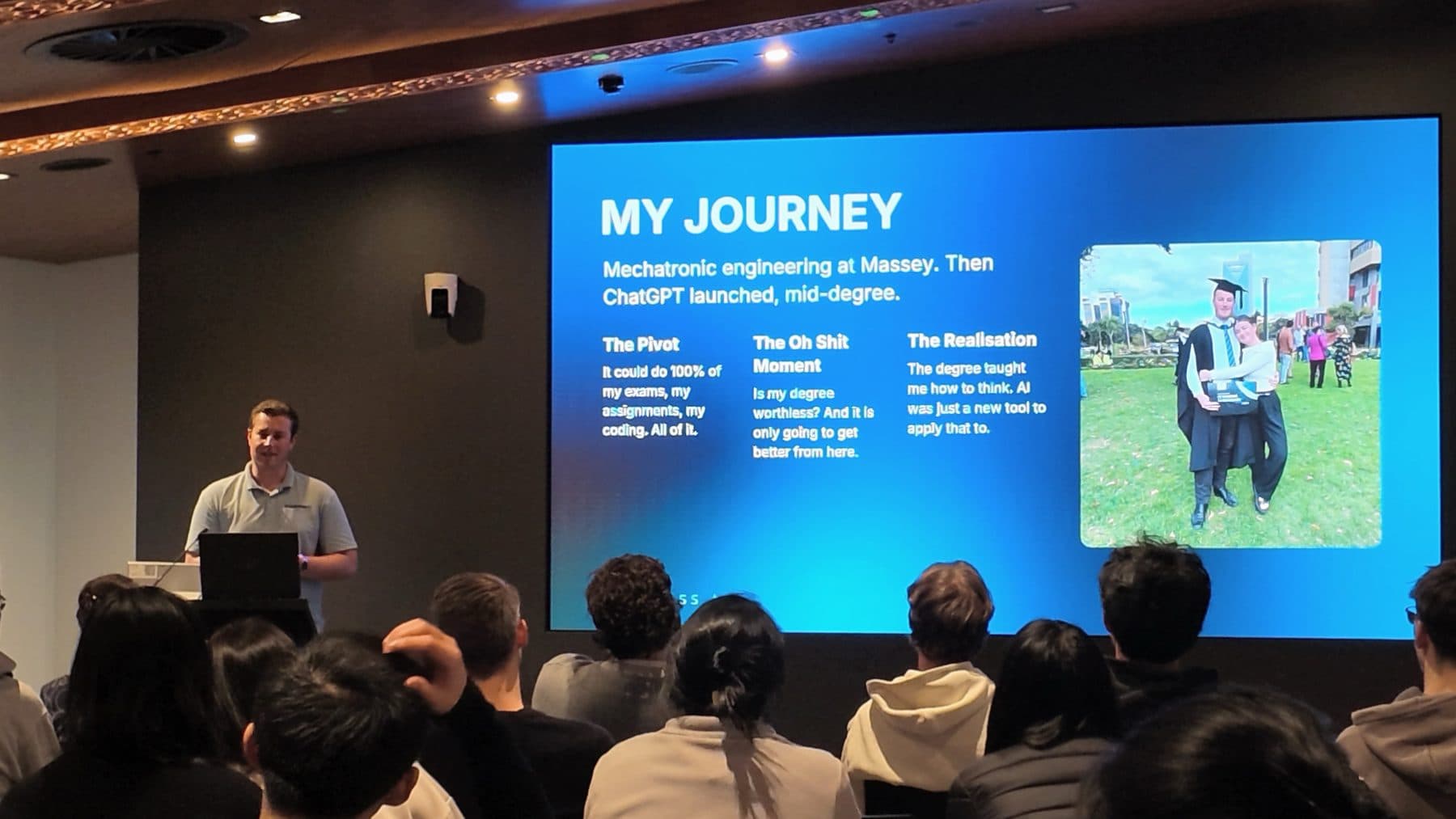
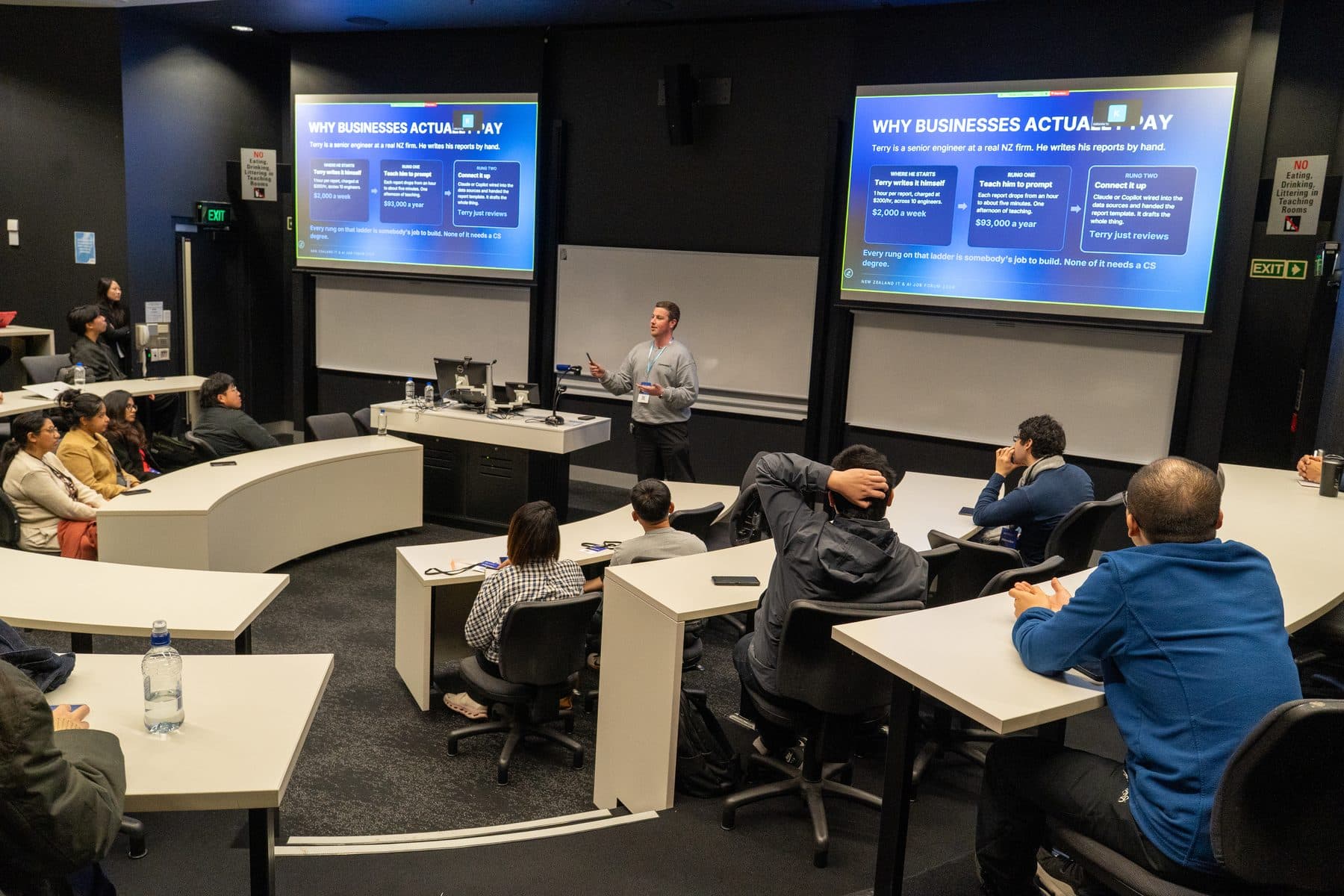
This is where to actually look, in roughly the order I would spend my time. It is a written-up version of what I told students at the NZ IT & AI Job Forum in August.
Most AI jobs in New Zealand are not advertised as AI jobs
Search "AI internship New Zealand" on a job board and you will get a thin, disappointing list. Search graduate software engineer, data analyst, digital, automation, product or transformation and you will find far more roles where AI is a large part of the actual work.
Titles lag reality. Companies file this work under whatever their org chart already has a box for, and very few have added a box called AI. So read the responsibilities, not the title. If a graduate role mentions internal tooling, process improvement, Copilot, chatbots, or "supporting the business to adopt new technology", that is an AI role with a conservative name.
The other thing to notice is where the work sits. There is no opt-out anymore: a Christchurch Netball event manager role recently listed AI in its requirements. A lot of the AI implementation being paid for in this country is happening inside businesses nobody would call tech companies: engineering consultancies, insurance brokerages, councils, energy, agriculture, professional services. If you only look at tech companies you are ignoring most of the market.
The job boards, and what each one is good for
Seek is the biggest general board in New Zealand. Set broad alerts rather than searching for AI, and check them once a week.
Indeed NZ tends to pick up smaller employers who never post anywhere else, which is useful because smaller employers are where a keen graduate has the least competition.
Prosple NZ is graduate-specific and good for the structured programmes at larger employers, which run on fixed intakes and close early. Those programmes usually want a degree, so if you are studying, this is where it pays off.
Student Job Search is free for tertiary students and is the best place for part-time and summer work while you are still studying. Part-time work at a business with a real problem is an underrated way in.
Summer of Tech matches students with New Zealand tech employers for internships and graduate roles, and runs on an annual cycle with events and a matching process. Check the site for current dates, because if you miss an intake you are waiting a year.
Then there is your university careers service, which is genuinely worth using. Some large employers recruit graduates almost entirely through university pipelines and never post those roles publicly.
Set the alerts up, then stop refreshing them. Job boards should take about fifteen minutes a week. Everything below is where the rest of your effort belongs.
Why the application pile is working against you
Here is the maths. A role that used to pull 20 applicants now pulls 100, and close to every CV arriving is written with AI. So employers use AI to screen them. AI writing them, AI reading them, and the odds of a human ever seeing yours are low.
I am hiring myself, and I have never made a hiring decision off a CV. For my own marketing hire I asked applicants to send a short video on why they wanted the role. The round before, without the video, drew about 50 applicants. With it, nine, and the quality was in a different league.
If a company wants a CV, give them a good one. Then ask what you can do that is not on the form. Do you know someone who knows someone there? Can you get to an event they will be at? Can you message someone on LinkedIn, or post something the people there will see? Every one of those happens outside the pile, which is the only place left where you are a person instead of a document.
The channels that actually work
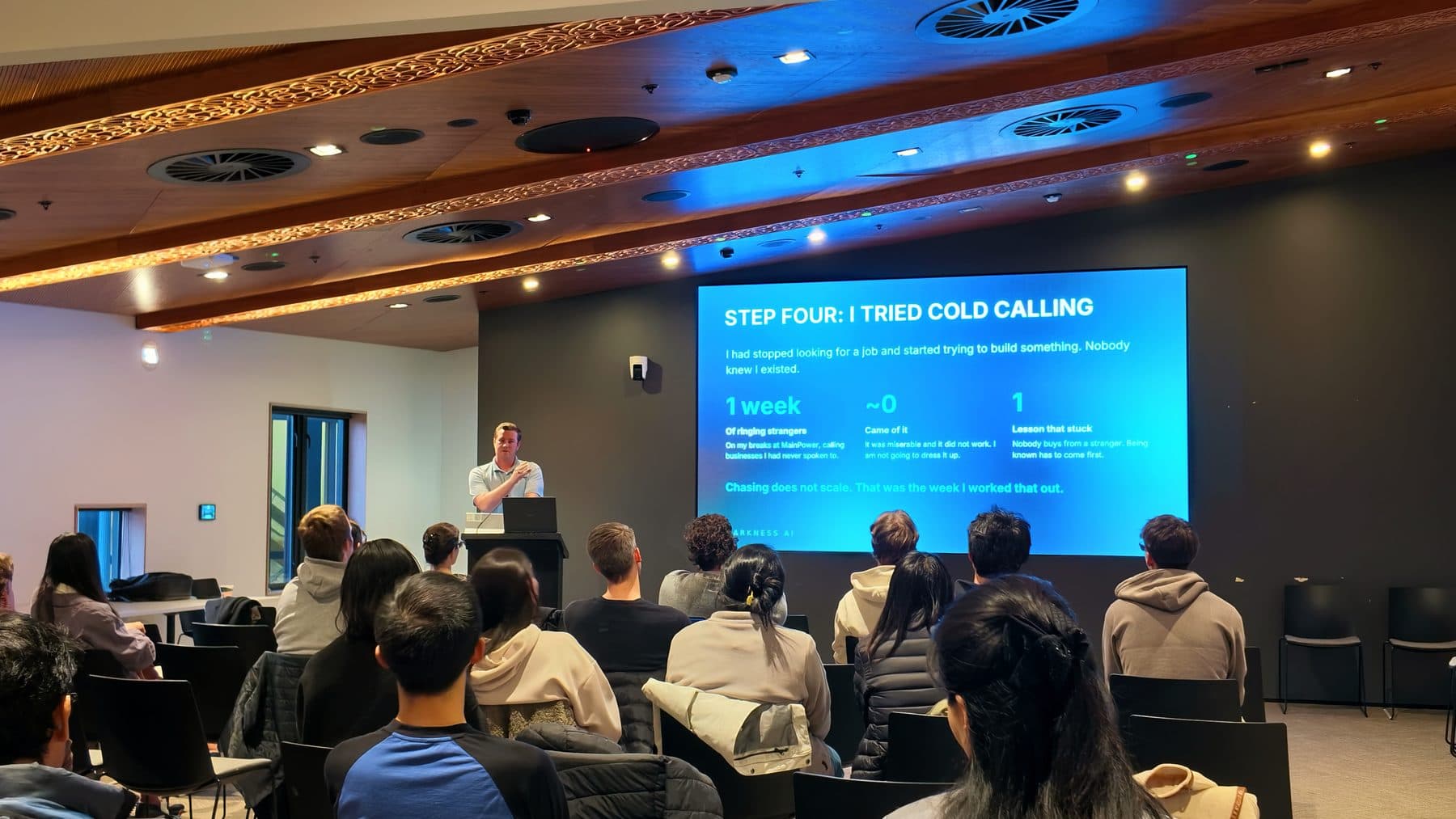
Direct outreach is first, and it is not close. Message people doing the work you want to do and ask for twenty minutes about what their team is building. When I started out I messaged everyone in New Zealand with AI in their LinkedIn title, somewhere between 50 and 100 people. Most ignored me. The ones who replied taught me the industry. That is not a job application, but it is how you find out which companies are actually doing this work, and it is how you end up in someone's head when a role opens.
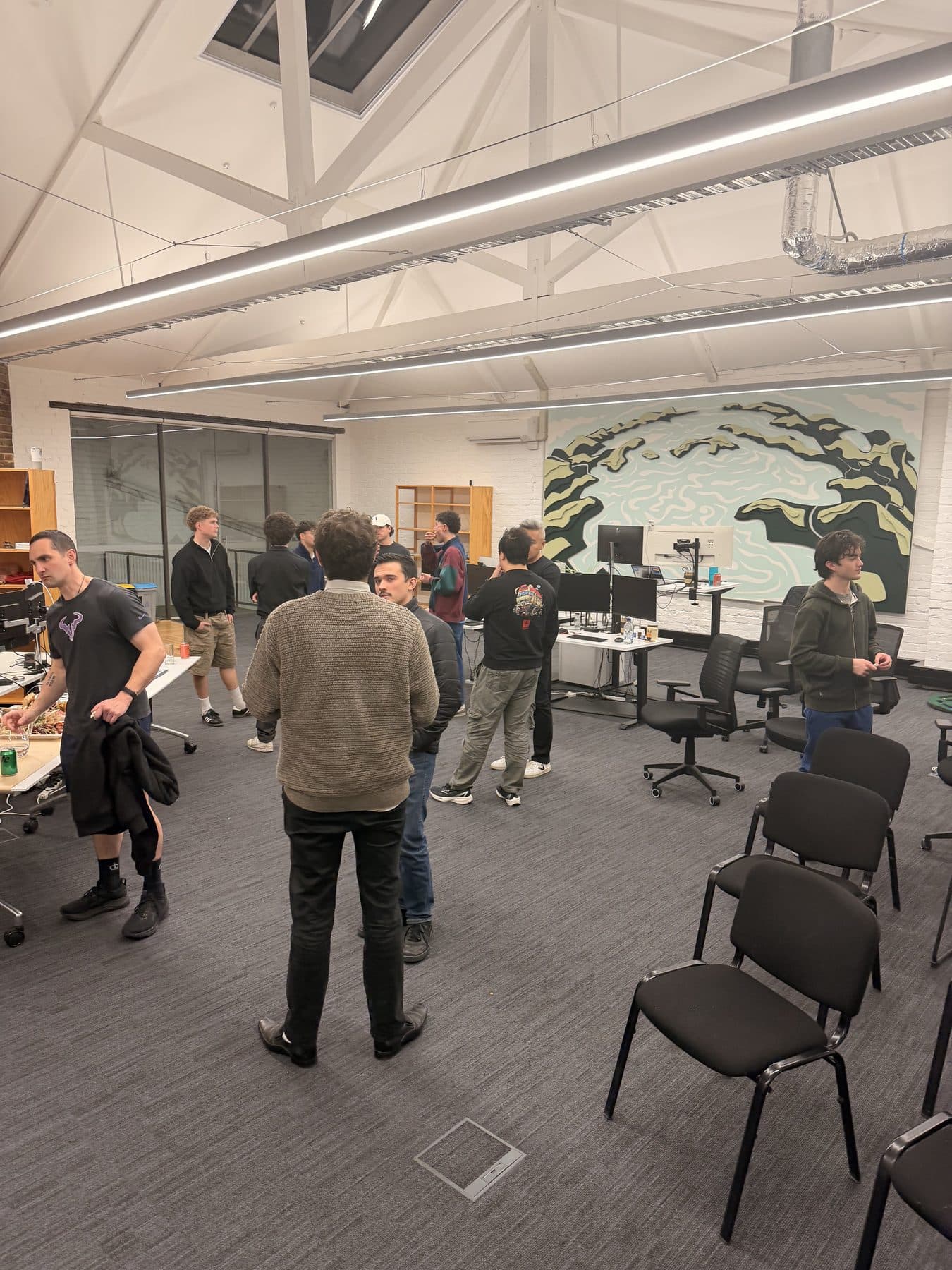
Communities and meetups are second. Yushi Chen, an AUT graduate who had built a full-stack AI coding agent platform, got an introduction to Lachie Christie at GrowLab through me and the community, and is now an AI developer there. Flock Consulting in Dunedin has hired out of the community too. Our AI meetups are free and run across the country, including Auckland, Christchurch, Hamilton, Dunedin and Palmerston North. Turn up, ask people what they are building, and follow up the next day.
Events with a lot of people in one place are third. Hackathons, conferences and industry events compress months of networking into a day. Our own national conference is on the calendar for 2027 and the waitlist is open.
And keep posting. If you have built something, write about it publicly. Recruiters and hiring managers in New Zealand do look, more and more employers run applicants through an AI that searches for them online, and almost nobody at your career stage is giving either of them anything to find.
How to approach a company that is not hiring
The best time to contact a small New Zealand business is when they have no listing up, because you are not sitting in a pile of 100 applications with everyone's AI-polished CV.
Keep the message short and make it specific. Name one process you think you could improve, say what you would do in a sentence, and link to something you have already built. Better still, build something for them before you get in touch: a chatbot on their FAQs, or a tool that analyses their competitors. A two-minute screen recording of a working thing beats three paragraphs about your passion for artificial intelligence every single time.
Working free or cheap is a real option, used carefully. Zavier Taylor messaged me as a first-year engineering student at Canterbury saying his lecturers were not teaching any AI, and offered to work for free. Almost nobody offers that, so I got him upskilled and he ended up on a contract. If you do it, set boundaries: agree a small scope and an end date up front, and make sure you come away with something you are allowed to show. Unpaid work with no scope and no end date is not experience, it is just unpaid work.
What they will actually assess you on
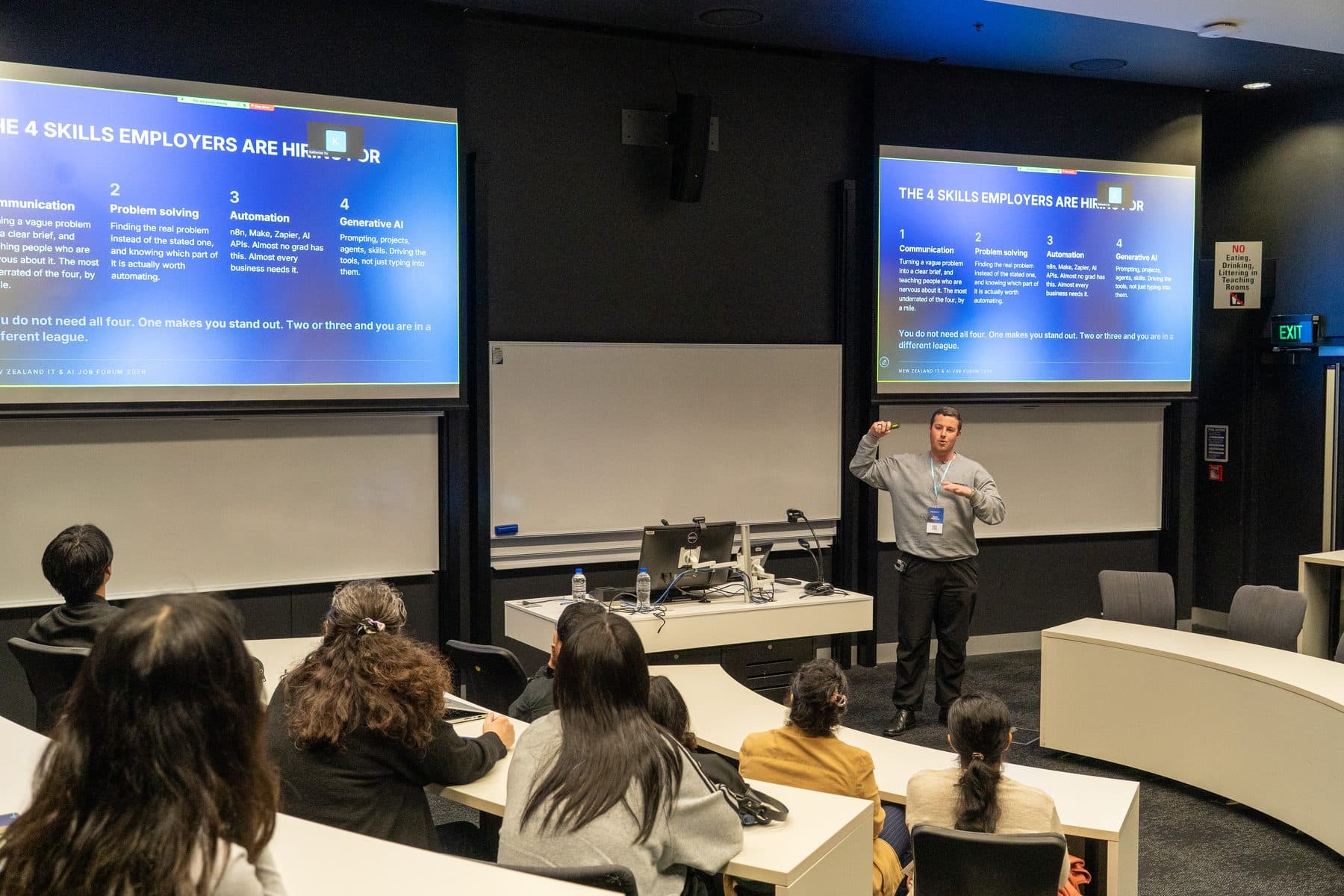
When I talk to students about this I use four skills, because they are what New Zealand employers are actually hiring for. Communication: turning a vague problem into a clear brief. Problem solving: finding the real problem rather than the stated one, and knowing which part is worth automating. Automation: n8n, Make, Zapier and AI APIs. And generative AI: prompting, projects and agents, driving the tools rather than just typing into them. You do not need all four. One makes you stand out. Two or three and you are in a different league.
It is also worth listening to the people who have recently done the hiring and the getting hired. Brodie Dye's take on what would impress an interviewer was to build something you are genuinely interested in with Claude Code or Cursor, keep up with AI news properly, and think in systems rather than code. His point was that AI is excellent at the maths and the coding but weaker on the people side, and anyone who can draw a good systems diagram can essentially build now.
Lachie Christie said he has deliberately hired people with no experience, to get a fresh AI-first perspective without the assumption that what worked before still applies. What he wants is someone who leans on AI to generate code efficiently but still makes the architecture decisions and understands the trade-offs, plus the softer skills: critical thinking, planning, and a tight feedback loop back to what the client actually needs.
Caleb Wharton's version was that enthusiasm matters over experience, because the field changes week to week and nobody can claim to know all of it.
So bring two or three finished projects with the working thing on screen, not a slide deck about it. Walk through each one in about sixty seconds: the problem, the solution, how it works and what you learned. Then tell them what broke and what you did about it. That part lands better than a flawless story, because everyone in the room knows nothing in this field goes flawlessly.
Where to point your search
Rather than hunting for "AI companies", look for companies with an AI team, an AI chapter, or an innovation or transformation function inside them. That is where these roles live. Speakers at our meetups have come from Trade Me, Zuru, RUSH, GrowLab Technologies, BlueHorizon AI and Stitch Systems, and the pattern across them is not the industry, it is that someone inside decided to build a team around this.
Know which kind of employer you are approaching. Larger employers and their graduate programmes usually want a degree and hire through a structured process. Smaller businesses, consultancies and startups are far more likely to hire on proof, with or without one, which is where a strong project and a good conversation carry the most weight.
Consultancies and agencies deserve a specific mention. They will put you in front of more industries in a year than an in-house role will in five, and early on that variety is worth a lot.
Government agencies and councils move slowly and have more process, but the graduate programmes are structured, the work is real, and there is a lot of it. Careers New Zealand is a reasonable place to start on the public sector side.
And do not write off non-technical companies with one technical problem. That is where I have done most of my consulting work, and it is where a lot of the unmet demand sits.
A realistic timeline if you are starting from nothing
Month one: get fluent with one assistant and one coding tool, and finish one small project. Month two: build a second project, and start posting about both. Month three: message five people a week, turn up to every relevant event you can get to, and apply for the structured programmes that have intakes open.
Months four to six is where it usually happens, and it rarely happens through the channel you expected. Do not read a rejection from a graduate programme as a verdict on you. Those processes are volume games with hundreds of applicants and a fixed number of seats.
The full version of the first three months is in How to get into AI in New Zealand, and if you are weighing up study alongside it, AI courses in New Zealand covers what is worth paying for.
The short version
Do not wait for a listing. The listings are the most competitive, slowest and smallest part of the market, and in AI specifically they are the part that lags furthest behind what companies are actually doing.
Build something, tell people about it, and message the people doing the work. If you want a shortcut to the last part, join the community and come to an AI meetup. It is free, and the room is full of people one or two steps ahead of you who were in your position not long ago. Employers who want to hire from the community should start with Harkness AI's hire AI talent page.